

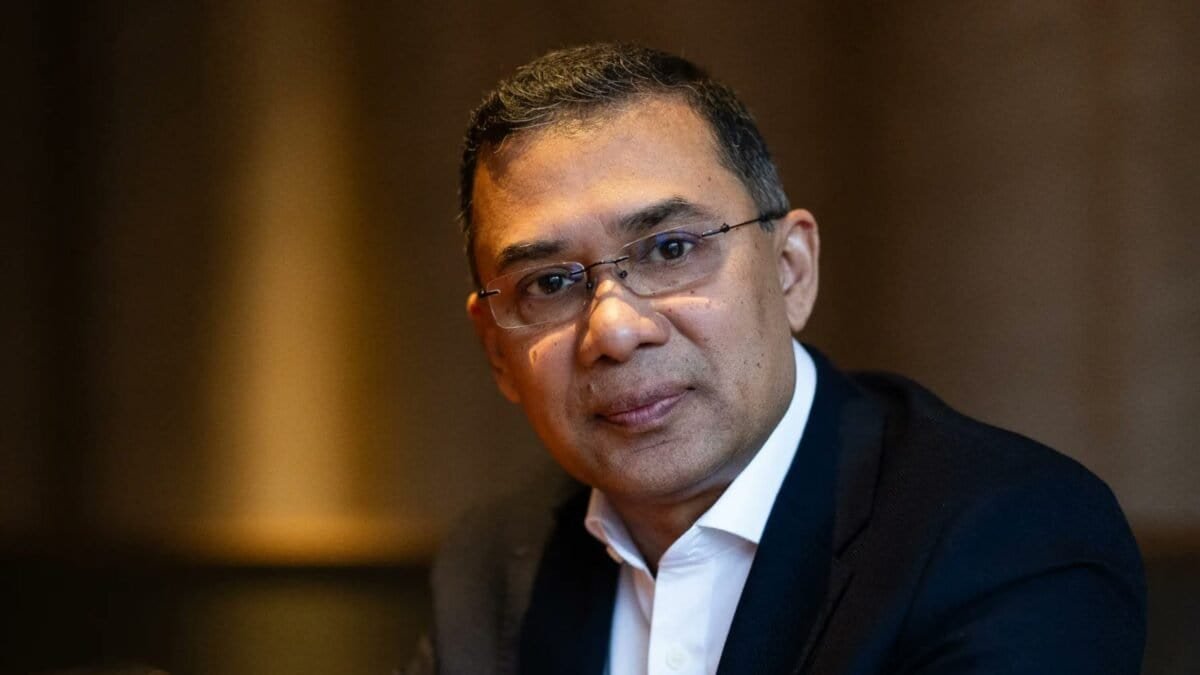
A new government was formed on 17 February under the able leadership of Tarique Rahman, following the thirteenth national election, in which the BNP won a landslide victory. People’s expectations of this new government are much higher than those of any previous government.
Education, one of the most significant sectors of the country, seeks a sea change. Quality education must come first, as it has fallen to the bottom of the list. The government, along with NGOs and community initiatives, is increasing the number of educational institutions and girls’ participation in education.
However, several challenges remain, including low literacy rates, high dropout rates, and poor quality education. Despite enjoying free primary education and government-provided textbooks, over 4.3 million children aged 6-15 years are not attending school, and the dropout rates are particularly high in rural areas.
In the midst of this critical situation, students have left their reading table and resorted to street protest, sometimes with valid reasons, sometimes for negligible cause and sometimes without any reason and have developed a mob culture that has engulfed the entire education scene ranging from the remotest parts of the country to the city of Dhaka, from primary schools to tertiary level educational institutions.
Students need to study diligently, with rapt attention, and develop critical thinking skills to prepare themselves to shoulder the future responsibilities of the family, society, and country, leaving behind the unruly path they have resorted to. The honour of the teachers has been severely downgraded since the July uprising, making room for opportunists to catch fish in the muddy water.
Teachers from primary level to university have been threatened, attacked and even manhandled by students chanting slogans against headteachers, principals and VCs. The state must not allow them to continue this unruly exercise. Their service and other matters must be regulated by law, not by the whims of students, if we want to restore normalcy and stability in educational institutions and the broader education system.
If we can ensure a peaceful and congenial atmosphere in our higher educational institutions and provide quality, global-standard education, it will attract students from surrounding countries to study medicine, agriculture, engineering, MBA, and other technical subjects.
Furthermore, this will be another source of foreign exchange earnings. Students from some Asian and African countries already study in different private universities in Bangladesh, but they do not enjoy a secure environment, and the quality of education does not attract more international students. This area calls for serious attention from the new government.
Many teachers lack both the knowledge and the tools to teach effectively, often resorting to rote learning rather than engaging students in meaningful learning experiences. Many people and educationalists prescribe only teacher training to address this situation.
However, the training our teachers receive is hardly implemented in the real classroom, as they participate mainly for financial benefits, to avoid the anxiety of classroom activities for several days, or to follow orders from the authority, rather than to develop their professional and subject-based skills.
The teachers, particularly those at the primary and secondary levels, receive training through different projects and government initiatives, but their individual development hardly appears in their classroom delivery, conduct, behaviour, attitude, and subject knowledge. However, many teachers continue to receive training year after year, but the real picture of the classroom, students’ performance, and the development of their base in important subjects remains unchanged.
Still, we frequently talk about teacher training. We have around 10 lakh teachers who need training. If we continue giving them training, we never think about how many years it will take. If we manage training for all of them, that does not sound viable either.
Teachers should study and conduct research in their own areas, and from time to time give presentations and arrange seminars and workshops in their own educational institutions and those in the surrounding area, which will expose their actual performance and skills. We send them to training centres to gather some information that they never share with others. It in no way promises their development.
A survey should be conducted to assess how the changes in the trained teachers’ practices have affected their classrooms. Most importantly, teacher recruitment (such as the NTRCA test) should be made highly competitive, genuine, and a wide range of areas need to be covered through it. If it is done seriously, teachers’ frequent training will not be necessary.
Teacher training sounds very attractive, but in practice, it is not as soothing, viable, or beneficial as the absence of teachers from the class for days at a time creates a serious management problem in institutions. Students’ classes remain unattended for various practical reasons, and sending teachers to training only adds to the problems.
Side by side, the new government must abolish the system of forming committees by party men, as it has seriously undermined the environment and the quality of education in non-government schools and colleges.
The local leaders want to encroach on the school and college committees just for financial gain and to show their muscle power at the cost of ruining the educational atmosphere of the country during the time of the fascist regime, which people do not want to see repeated.
BNP, in its election manifesto, promised to allocate 5 per cent of GDP to education; that sounds good, but how the money would be spent calls for serious discussion and scrutiny. Our budget execution rate is only about 85%, according to the World Bank’s Public Expenditure Review. Delays, bureaucratic inefficiencies, and weak project management reduce impact. Simply spending more without improving governance and oversight would risk wasting opportunities for transformation.
The lack of vocational and technical education exacerbates the gap between graduates’ skills and the job market’s requirements. Industries often struggle to find individuals with the necessary technical expertise, hindering economic growth and productivity. The absence of vocational and technical education contributes to high rates of unemployment and underemployment.
Many graduates are unable to find suitable jobs due to the lack of practical skills and industry-specific knowledge. This situation leads to wasted human potential and economic stagnation. There is a prevalent perception in society that vocational and technical education is inferior to academic education. This stigma discourages individuals from pursuing vocational paths, leading to a shortage of skilled workers in critical sectors.
To tackle the lack of vocational and technical education, it is essential to prioritise and invest in these fields. This includes establishing specialised vocational training institutes, updating curricula to meet industry demands, and promoting vocational education as a viable and valuable career path. Collaborations between the new government, educational institutions, and the private sector can help bridge the gap between education and industry needs.
Encouraging entrepreneurship among vocational graduates can create job opportunities, promote self-employment, and contribute to economic growth.
The recent growth of English-medium private schools for the elite, madrasas of different types for people experiencing poverty, and mainstream government and semi-government schools for the majority of the population—low-income, lower-middle, and middle-income families—actually reflects the reality of the society and time, which we cannot disagree with.
The elite class will never send their children to the government primary or secondary schools or madrasas. The guardians who send their children to madrasas will never consider sending them to English-medium schools. In this respect, we can introduce several common subjects across all streams of education so that learners can learn our culture, traditions, and language well, without creating the huge gap that currently exists.
Giving the same type of education to all streams of education sounds absurd, even though some of our educationists continue to advocate for it.
We must bridge the gap between education and employment to harness our demographic dividend. Currently, over 4 million students are enrolled in 9,256 madrasas, yet English language proficiency among them remains critically low compared to the other two streams.
Integrating Arabic and English language instruction within madrasas would create pathways for employment in the Middle East. Similarly, the global economy’s pivot to Artificial Intelligence (AI) demands urgent action. China mandated AI education for all schools by 2025, while Vietnam and Malaysia are embedding AI modules across secondary schools.
We must introduce AI basics into the school curriculum to prepare students for jobs in automation, data science, and digital services. Moreover, practical steps need to be taken to develop students’ genuine skills in a global language like English without treating it merely as a subject, as we have been doing for a long time.
About the Author


Masum Billah works as the President of the English Teachers' Association of Bangladesh (ETAB), Dhaka, Bangladesh. He previously worked as an Education Specialist at BRAC, an international NGO in Bangladesh.


